lunes, 29 de mayo de 2017

PLASTICS AND TEXTILES

Resultado de imagen de PLASTIC MATERIALS

Resultado de imagen de bombilla sin fondo

KEY CONCEPTS:

PLASTIC MATERIALS


+Plastics consist of long chains of atoms wich are mostly composed of carbon.

+Plastics can be classified into natural and synthetic plastics.

+The process of manufacturing plastic is called polymerisation.
+Plastic material are resistant, insulating ( against electricity, heat and sound), ductile,malleable, impermeable and light.
+There are three types of plastic recycling processes: chemical and mechanicalrecycling and energy recovery.

THE CLASSIFICATION OF PLASTICS
Resultado de imagen de THE CLASSIFICATION OF PLASTICS


+Thermoplastics are usually made from petroleum products. The most common thermoplastics are:

-Polyethylene terephthalate (PET)

-High-density polyethylene
-Polyvinyl chloride (PVC)
-Low-density polyethylene
-Polypropylene
-Moulded polystyrene
-Expanded polystyrene or Styrofoam
+Thermosetting plastics are made from petroleum products. They include:
Polyurethane
Bakelite
Melamine
Polyester resins
Typical elastomers include rubber and neoprene.

 PLASTIC FORMING TECHNIQUES

+Various industrial techniques can be used to manufacture plastic products, such as: estrusion, calendaring, vacuum forming and moulding.
+The main techniques for using moulds are as follows: blow moulding, injection moulding and compression moulding.

MODIFICATION TECHNIQUES

+Modification techniques use tools and machines to make changes to prefabricated materials, such as sheets, bars or mouldings.
+Examples of these techniques include: measuring  drawing marks ad lines  cutting  drilling  filing and sanding  joining.
+You must always pay special attention to health and safety rules.

TEXTILES
Resultado de imagen de TEXTILES

+Both natural and synthetic fibres can be woven to make a variety of textiles.
+Natural fibres may come from animal sources (wool, silk), plant sources (cotton, linen, esparto, bamboo) and mineral sources (gold, silver and copper fibres).
+Synthetic fibres, such as nylon, poliester, rayon and Lycra, are plastic materials.

lunes, 15 de mayo de 2017

electronics
electronics involves the study of circuits and components that modify the intensity, direction or properties of electric currents.
Resultado de imagen de electronics


electronic components

 in the section, we will analyse the most common electronic components.

fixed resistance or resistor

 opposes the flow of electric currents. its value which we measure in ohms, is indicated by a code of colours and numbers.
Resultado de imagen de resistorResultado de imagen de resistor color code
variable resistance or potentiometer
what the difference between a potentiometer and a variable resistor
A variable resistor is made up of a potentiometer wired with the center leg tied to one or the other end of the pot. This permits it to act like a variable resistor.

resistance that depends os a physical factor

There are four factors that influence the resistance in a conductor. Thickness, length, and temperature. The fourth factor is the conductivity of the material that is used. Some metals (copper, silver) are just more electrically conductive than others (iron, aluminum)

capacitors

are components that can store an electrical charge (the value of capacitor indicates the charge in volts that it can store -- farads)
Resultado de imagen de capacitors

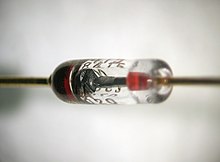
diodes

diode is a two-terminal electronic component that conducts primarily in one direction; it has low (ideally zero) resistance to the current in one direction, and high (ideally infinite) resistance in the other.


transistors

transistor is a semiconductor device used
to amplify or switch electronic signals and electrical power
(they are made from the base, the collector and the emitter)