SOUND
we can transform electric current into sound by using electromechanical devices, such as bells and buzzers.


ELECTROMAGNETIC MECHANISMS
Are devices that can convert movement into electricity or vice versa.
ELECTROMAGNETIC GENERATORS
Transform mechanical energy into electricity:
Dynamos
A dynamos consist of a magnet and a rotary coil. The coil is located between the two poles of the magnet. The ends of the coil have tow semi-circulaar conductors, which form the commutator. These conductors are attached to carbon brushes, which in turn are conected to electrical wires. When electricty is applied to the coil, it rotaters and begins to generate direct current in the coil.

Alternators
A simple alternator is almost identical to a dynamo, except for the commutator, which consist of two metallic rings connected to carbon brushes, Instead of direct current, this produces altenating current.

ELECTRIC MOTORS
An electric motor is a device that can transform electrical energy into movement. It uses the forces of attraction and repulsion between a magnet and an electrically-charged wire.

RELAYS
A relay is an elctromagnetic component that works as a switch. When electricity passes through the coil, it acts like a magnet. The coil attracts a moveable metal contact towards another fixed contact. When the electricity stops flowing, the moveable contact goes back to its original position.

ELECTROMAGNETIC EFFECTS
The magnetic field is a effect can be used to produce movement, for example in electric motors, relays and other devices.
The scientist Michael Faraday discovered the opposite effect. The most common are dynamos and alternators.
Types of current
Direct current
Between the terminals of a battery, there is a continuos, stable flow of energy. If we use a voltmeter to measure the current in a car battery, the result will always be 12 volt. This is called direct current.--
Alterneting current
Alternating current occurs when charge carriers in a conductor or semiconductor periodically reverse their direction of movement.
The variation of any electrical parameter over a period of time (in this case the electric current) is an electric signal.
The tension or voltage of domestic electricity is analternating signal because it alternates between positive and negative values. Its waveform is alsosinusoidal, with a smooth, regular shape.--
 The efficiency of alterning current
The average power of alternating current is equal to the direct current that is needed to produce the same effect. In the case of an alternating sinusoidal current, the average power would be as follow: Vef = Vmax /√2

Transformers
Transformers consist of two windings made of copper wire.
If we apply an alternating current to one of them (V1), it will
produce a certain voltage in the other (V2) The value will
depend on the number of times that the copper wire has
been wrapped around each winding, represented as n1 and
n2: V1/V2 = n1/n2
EFFECTS OF ELECTRIC CURRENT
The movements of electrons though conductive
materials produces effects that have useful
application.
HEAT:The energy that an electric current
produces as heat is called the Joule Effect.
Formula: E=|x|xRxt

LIGH:
There are various ways that electricity
can be used to produce ligh.
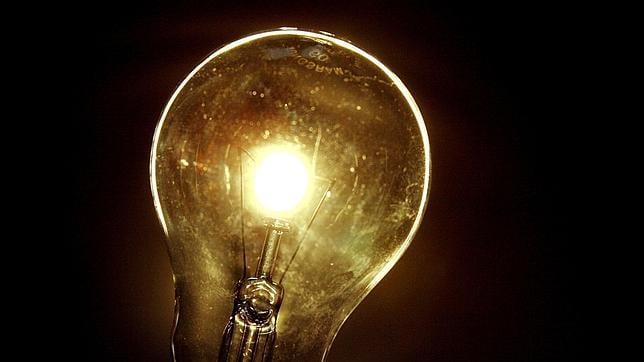
Incandescent bulbs: When an electric current
passes through the metallic filament of a
light bulbs, it produces light.

Fluorescent tubes: There is a metallic
filament, normally made of tungsten.
An electric current in the gas excites mercury vapor which produces short-wave ultraviolet light that then causes a phosphor coating on the inside of the lamp to glow.

Light-emitting diode(LED):is a semiconductor device that emits visible light when an electric current passes through it. The light is not particularly bright, but in most LEDs it is monochromatic, occurring at a single wavelength.


